


Bedtime Stories vs. Audiobooks: Which Helps You Fall Asleep Faster?
It's 11:20, and you're tired in that specific way that means your body has agreed to sleep while your head is still drafting tomorrow's to-do list. Two options are waiting on the nightstand, or rather in your phone: a bedtime story read aloud in a slow, quiet voice, or the audiobook you've been chipping away at all week. Both promise to carry you off. They work in very different ways, and one of them may be quietly keeping you awake.
What a Sleep Aid Actually Has to Do
A good sleep aid does one small job: it gives the mind something gentle to hold so it stops reaching for the things that keep it awake. The email you didn't send. The strange comment someone made at lunch. That low hum of worry that gets louder once the lights are off.
The trick is partial occupation. Too little, and your thoughts fill the silence. Too much, and you're invested. The best bedtime listening sits in the narrow middle — interesting enough to follow, dull enough to abandon. That's the whole test. Everything below is detail hanging on one question: does this ask anything of me at midnight?
Plot Complexity: Why Low Stakes Win at Night
A story written for sleep tends to have almost no plot engine. A woman walks to a bakery. A man takes the slow train home. Someone describes rain on a tin roof for four minutes. Things happen, but nothing is at stake, and nothing is built to make you ask what comes next. That's deliberate. The moment your brain starts predicting, it's working.
Audiobooks are built the opposite way. Chapters end on hooks, dialogue carries conflict, and even quiet literary fiction asks you to track names, timelines and motives. It's a small tax that's fine at three in the afternoon and heavy at midnight. Then there's the rewind problem: you drift off, lose twelve minutes, wake, feel faintly guilty, and scroll back. Now you're awake and administratively busy.
That isn't an argument against audiobooks — only against a certain kind of them. If you want to try audio for sleep, choose a book you've already finished. Familiarity removes the need to follow, and a half-remembered story is a pleasant place to rest. Long nonfiction with low narrative drive works too: nature writing, a history of something ordinary, anything unhurried.
A practical rule: if you find yourself hoping the chapter goes on a little longer, it's the wrong book for bedtime. Save it for the commute.
Narration Style: The Voice in the Room
Narration built for comprehension is not the same as narration built for sleep. Audiobook narrators work at a brisk, clear pace, landing hard consonants, giving characters distinct voices, keeping energy up across hours of listening. It's a performance, and it's meant to hold you.
Sleep-story narration goes the other way. Pace drops, volume flattens, and the pauses between sentences run longer than would feel comfortable in daylight. Many are recorded close to the microphone to keep the low frequencies — the part of a voice that feels like company rather than information.
Two details are worth your attention:
- Dialogue and character voices. Every accent, whisper or shout is a small alert. One steady voice describing a room is gentler than a cast of four arguing in a kitchen.
- How you listen. A speaker across the room feels like someone reading to you. Earbuds feel like a screen pressed to your ear. If you use earbuds, pick soft ones and keep the volume genuinely low.
And set a sleep timer. Fifteen to thirty minutes is plenty. Finishing the chapter is not the goal.
Mental Engagement: Finding the Middle Setting
Think of alertness as a dial. Turn it too low and your own thoughts rush in. Too high and you're at the cinema. Bedtime stories work by handing you images without demanding you do anything with them: light through a kitchen window, a kettle coming to the boil, the shape of a hill. You picture it, and picturing sits very close to dreaming.
Audiobooks engage a different gear. Following an argument or a twist means holding information in mind, and working memory is exactly what you're trying to power down. There's an emotional register at play too. A tense book lifts your pulse slightly, sometimes pleasantly — but pleasant alertness is still alertness. A story about someone making tea does nothing to your heart rate, which is the point.
Here's the part people miss: a story that is mildly, kindly boring gives your mind permission to wander off. Wandering off is what falling asleep is. If the narration is too gripping, you stay for the whole thing.
Where Audiobooks Genuinely Win
Fairness matters here. Some listeners find sleep stories cloying — the soft-voiced whimsy, the talking foxes — and a story that irritates you will not relax you, however slowly it's read. Audiobooks feel adult, and for some people that matters more than pacing.
Audio also suits minds that need substance to settle. If gentle description leaves you restless and reaching for your phone, a long, calm book may hold you better. The format has practical advantages too: enormous catalogues, excellent production, and the chance to be read to by a voice you simply like. That last one is underrated. Being read to by someone whose voice you enjoy is its own kind of comfort.
A Quick Way to Decide
Skip the theories and match the format to the problem you actually have.
Try a bedtime story if:
- Your mind grabs the next plot point and won't let go
- You've woken at one in the morning and scrolled back three chapters
- You like the feeling of being read to, with nothing expected of you
- You want something you can start and leave at any moment
Try an audiobook if:
- Sleep stories feel too sweet or too slight to hold your attention
- Your thoughts circle, and you need a little substance to interrupt them
- You prefer nonfiction, or you're happy to re-listen to a book you know well
- You've already got the habit of a sleep timer and low volume
Run a Three-Night Test
- Night one: a sleep story, speaker across the room if you can, volume just above the room's background noise, timer at twenty minutes.
- Night two: the same story. Repetition is not cheating; it removes the small effort of orienting yourself.
- Night three: an audiobook you've already read, or slow nonfiction, with the same settings.
Each morning, note three things: roughly how long it took to drop off, whether you rewound anything, and how you felt at seven a.m. Then repeat the sequence if you want a clearer answer. Keep one rule throughout — no rewinding, ever. Losing the thread means the recording did its job.
One sensible caveat: if you're routinely awake for more than half an hour, or you wake unrefreshed, or a partner mentions snoring or gasping, raise it with a doctor. Audio can help you wind down. It can't fix a breathing problem or a sleep disorder, and no story is a substitute for proper advice.
For most people, the answer settles quickly once they stop treating bedtime listening as entertainment and start treating it as a wind-down tool — something chosen for how little it asks of you, not how much it gives.
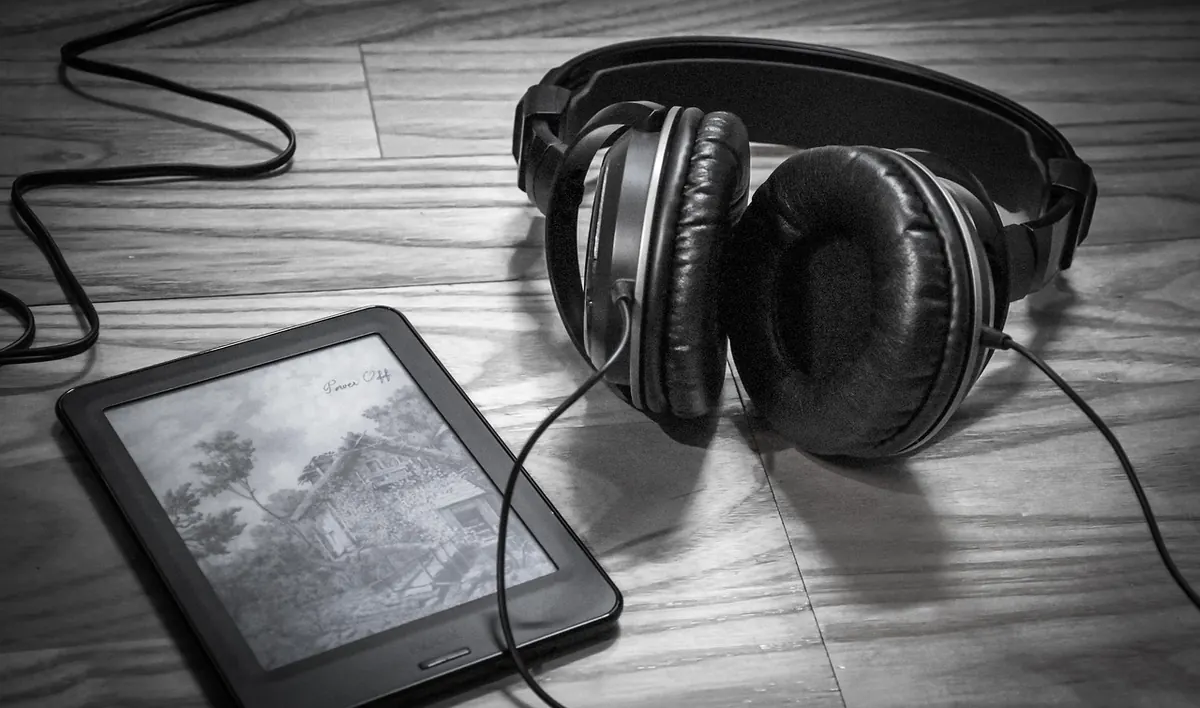
Photo: CavalryLu / Pixabay